
 You don’t read much about Jacob Thompson these days, but during the Civil War he was in charge of the Confederate Secret Service in Canada. Thompson had been Secretary of the Interior prior to the South’s succession.
The real story you haven’t been told is that the plot to divide the U.S. into two warring countries may have been plotted in advance, starting with the funding of the abolitionist movement headquartered in Boston, as well as the Southern Rights movement. Some of the most prominent American masons (including Albert Pike) worked hand-in-glove with Thompson, who had enormous assets placed at his disposal in a bank in Montreal. Despite all their pleas and constant efforts, the Confederacy was unable to make a military alliance with any European country, all of which officially refused to recognize this new nation.
When things got desperate towards the end of the war, Thompson and his superiors allegedly began fomenting some really nasty plots, like distributing disease-tainted blankets to civilians in the North. This plot may have been an invention of the super spook Charles Dunham (aka Sandford Conover). One thing we know: Stanton’s Military Tribunal spent almost a third of its case on unveiling Davis’ many sinister plots, most of which cannot be substantiated today and appear to be the invention of Dunham. But a very real plot involved the kidnapping of Abraham Lincoln, and strangely it was Dunham writing as Conover who first revealed this plot in the papers, but then Dunham also sent a letter to Lincoln requesting permission to kidnap Davis from his Richmond home. The idea of kidnapping and/or assassinating both Presidents seems to have originated with Dunham.
 On October 19, 1864, Thompson sent 21 Confederate cavalrymen dressed in civilian clothes to hold up three banks in St. Albans, Vermont. The soldiers escaped into Canada with $208,000. During the robberies, bank workers were forced to swear allegiance to the Confederacy before opening the vaults, a scene captured in the newspaper lithograph below. The raid backfired, however, since most Canadians resented the use of their country to launch raids. Around $88,000 was recovered and returned to the banks, although Canada refused to extradite the 21 men involved. Immediately after the raid, Dunham appeared in Canada in a failed attempt to penetrate this conspiracy, but was eventually unmasked by the Confederate community in Canada.
The great thing about this case is many vital documents are available free online, and the internet is full of evidence. The trial transcript can be downloaded, as well as a the autobiography of the chief investigator, Lafayette Baker. But I also found a treasure trove of documents few books ever refer to, including a War Department expose on the Knights of the Golden Circle, and an alleged diary of John Surratt, which goes into elaborate detail regarding the rites of the K.G.C. But since that secret society did not admit Catholics, which Surratt was, the diary is a forgery, like so many other documents associated with this case.
Surratt was one of the primary couriers for the Confederate Secret Service, so any possible inductions into the K.G.C. or other secret societies could have been part of his spook activities. Considering the War Department had recently concluded an exhaustive report on the K.G.C. and some alleged Knights of that organization were at the center of Lincoln’s assassination, I have to wonder why the K.G.C. and their association with the Copperheads never came up during the trial, an omission of evidence pointing towards the possibility of a kangaroo court rushing to judgment, hanging some patsies to let real conspirators walk free.
 Since most historians support Secretary of War Edwin Stanton’s military tribunal, most of what you read about the Lincoln assassination follows his carefully constructed script, however bogus that appears today.
However, in the late 1930s, a chemistry professor in Chicago who was a Civil War buff declared Stanton (left) was part of the conspiracy and marshaled much evidence to support this claim. Of course, the professor was laughed out of the history game and sent back to tinker with test tubes. However, I believe that professor was correct. His name was Otto Eisenschiml and he deserves a place alongside Antony Sutton as one of the great conspiracy researchers in American history.
Stanton arrived at the scene of the assassination and took charge of the country for weeks, controlling the military, the press, the Washington police and the Secret Service. It’s never been explained why telegraph lines went dead for two hours right after the assassination, although Stanton’s telegraph at the War Department stayed operational throughout the night. It’s also never been explained why Booth arrived at the scene carrying only a one-shot derringer, or why Lincoln was left completely unguarded at the precise moment of his arrival.
History has given us the impression Stanton and Lincoln were friends, but this is not the story I’m turning up.
 Gideon Welles (left) was the Secretary of the Navy during the Civil War and after he retired from politics, he published a diary, and here’s what Welles had to say on the subject of Stanton:
“His administration of the War Department has been wastefully extravagant and a great affliction to the country. Stanton has the executive ability, energy and bluster. He is imperious to inferiors and abject to superiors. Wanting in sincerity, given to duplicity, and with a taste for intrigue, he has been deep in the conspiracy and one of the chief instigators of the outrageous proceedings in Congress, a secret opponent of the President’s from the commencement of his administration…[Stanton’s] administration of the War Department cost the country unnecessary untold millions of money and the loss of thousands of lives.”
Diary of Gideon Welles, Secretary of the Navy Under Lincoln and Johnson, published by H. Mifflin, 1911
At the time of the assassination, the Supreme Commander of the K.G.C. was the man who financed Stanton’s career in politics in Ohio and had been shipped to the South during the war by Lincoln as an enemy alien.
 President Lincoln’s death was the first successful presidential assassination in United States history and as such deserves attention because many of the details mirror those found in later assassinations. The biggest missing piece from the officially sanctioned history are the names of the secret societies that manipulated events behind the scenes and the political operatives they often employed. If you saw Steven Spielberg’s Lincoln, you saw that passage of the 13th Amendment was left to some professional political fixers who traded patronage jobs for votes.
 John Wilkes Booth was an intelligence operative and possible member of a devious Southern rights secret society called the Knights of the Golden Circle, which had thousands of members sprinkled throughout the north. The network was uncovered by a Union War Department investigation shortly after the Civil War broke out and could have been set-up in anticipation of the war.
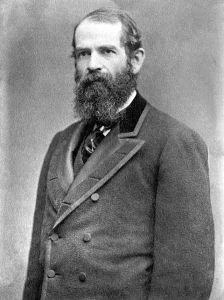 The most likely candidate as Grand Poobah of the Lincoln hit would be Jay Gould, who made more money on Wall Street during the war than anyone else.
 I tinkered around conducting my own deep political research for years, but it wasn’t until I began the study of secret societies that I made any real headway. My big breakthrough was exploring connections between the Sicilian men-of-honor society and the Central Intelligence Agency, two secret societies that plotted to assassinate Fidel Castro. But after JFK called off that murder, the same team assembled to kill Castro ended up killing Kennedy. If Congress ever holds a real investigation, this is the reality that will emerge, although I suppose the instigators will be long dead by then.
 Check out Surratt (left) wearing his Papal Zouave uniform. Surratt was such a devoted Catholic he volunteered to defend the Papal States during the final years of their existence. Eighteen months after his mother was hung, however, he was spotted in Egypt and escorted back to America to stand trial still wearing his Papal Zouave uniform. Fortunately for Surratt, a law had just been passed forbidding military courts from trying civilians so the government was unable to secure his conviction, although Surratt freely admitted associations with Booth, he claimed no part of the murder and most of the jury believed him.
 While researching this blog, I uncovered a scientist and amateur historian who blew the whistle on Stanton back in the 1930s and Otto Eisenschiml’s groundbreaking book, Why Was Lincoln Murdered, can be read online for free here:
 I don’t practice spiritual intolerance, so I have deep respect for the masonic traditions, just as I respect the histories of all the major religions that support peace, non-violence and the brotherhood of all mankind under the eye of the Great Spirit that Runs through All Things.


